Starting your day with a gentle stretch routine can significantly improve joint flexibility and reduce stiffness, especially if you have limited mobility. A structured, seated stretch routine provides a safe and effective way to improve your overall flexibility and mobility while minimizing discomfort. This guide outlines a complete, easy-to-follow seated morning stretch plan that can help you begin your day with more comfort and energy.
Key Benefits of Seated Stretching
- Improved Mobility: Gentle movements increase the range of motion in your joints and muscles, helping to improve overall mobility.
- Reduced Stiffness: Stretching promotes blood circulation, helping to loosen up tight muscles and joints, which is especially helpful in the mornings.
- Increased Flexibility: A consistent stretching routine will gradually increase your flexibility, making daily movements easier.
Complete Seated Stretch Routine
1. Warm-up Phase (5 minutes)
Before starting the stretches, it’s essential to warm up your body. This prepares your muscles and joints for movement and reduces the risk of injury.
- Proper Form: Sit comfortably in a chair with your feet flat on the ground. Relax your shoulders and take deep breaths to release any tension.
- Safety Tips: Begin slowly, focusing on your breath and comfort. If any stretch causes pain, stop immediately.
2. Upper Body Stretches (10 minutes)
These stretches help to relieve tension in the shoulders, neck, and arms.
- Shoulder Rolls: Sit with good posture and slowly roll your shoulders forward, then backward. Perform 5 rolls in each direction.
- Arm Circles: Extend both arms to the sides and make small circles, moving gently. Repeat for 5 circles in each direction.
- Safety Tips: Move slowly and maintain control over the movement. Focus on good form and avoid overstretching.
3. Core and Back Stretches (10 minutes)
Stretching your core and back helps improve spinal mobility and prevents discomfort during daily activities.
- Seated Twists: Sit upright and place your hands on your shoulders. Slowly rotate your upper body to the left, then to the right. Repeat 3 times for each side.
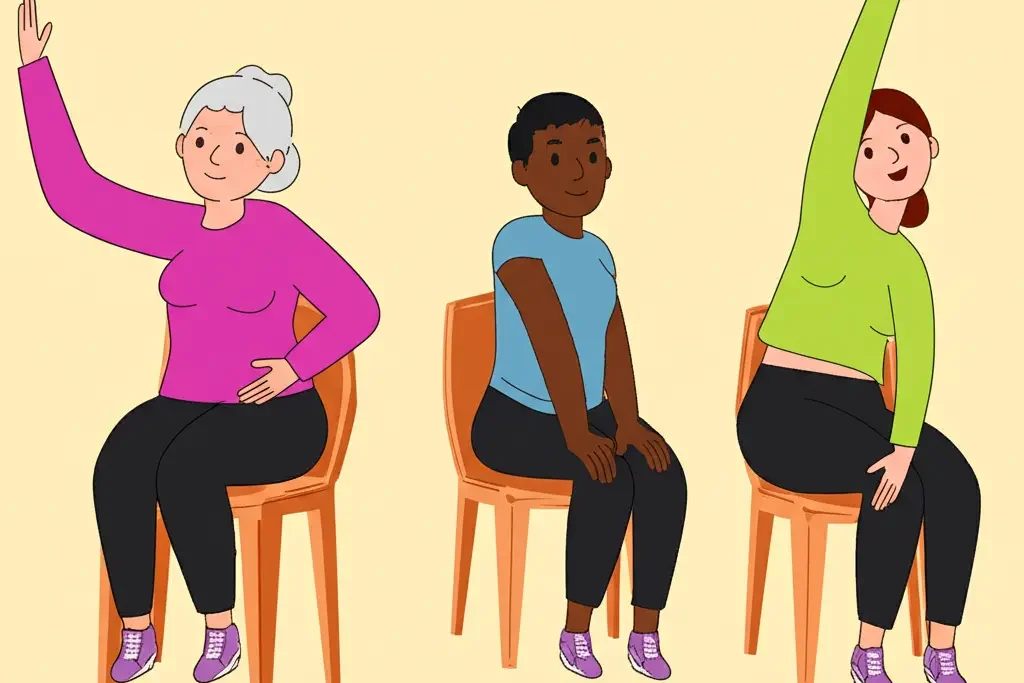
- Side Stretches: Reach one arm overhead and lean gently to the opposite side, feeling a stretch along the side of your torso. Hold for 5 seconds, then repeat on the other side.
- Safety Tips: Keep the movements slow and controlled. If you feel discomfort, reduce the intensity of the stretch.
4. Lower Body Stretches (10 minutes)
Stretching the lower body improves leg flexibility and circulation, which is essential for maintaining mobility.
- Ankle Pumps: Sit with your legs extended and gently flex and point your feet. Repeat this movement 5 times for each foot.
- Knee Lifts: While sitting, lift one knee towards your chest, hold briefly, and lower it back down. Repeat for each leg, performing 5 lifts on each side.
- Safety Tips: Keep the movements small and gentle. Avoid rushing, and focus on comfort rather than intensity.
5. Cool-down Phase (5 minutes)
The cool-down phase helps you relax and ease your body back into a resting state.
- Proper Form: Sit comfortably, breathe deeply, and focus on releasing any remaining tension in your muscles.
- Safety Tips: Allow your body to relax, and breathe deeply. Avoid forcing any stretches at this stage.
Adaptation Strategies
It’s important to modify stretches to suit your body’s unique needs. Adapting exercises based on your comfort level and physical condition will help you build consistency and avoid injury.
- General Modifications: If any stretch feels too intense, reduce the range of motion or take longer rest periods between stretches.
- Use of Support: Consider using a cushion or support for extra comfort if needed. Supportive chairs or a small pillow behind your lower back can help improve posture during stretches.
- Progress Gradually: Start with easier stretches and slowly increase the difficulty as you feel more comfortable.
Progress Monitoring
Tracking your progress is essential for staying motivated and making adjustments as needed.
- What to Track: Monitor your pain levels, stiffness, mobility, and overall energy throughout the routine.
- How to Track: You can keep a journal to track your daily stretching sessions or use a mobile app to record any improvements over time.
Getting Started with Seated Stretching
Begin your journey to improved mobility by starting with simple stretches and gradually increasing the duration and intensity as you become more comfortable. Focus on proper form and avoid overdoing it in the beginning.
- Consistency is Key: Make stretching part of your daily morning routine. Consistency will lead to the best results over time.
- Adjust as Needed: Listen to your body and make modifications based on how you feel each day. Some days you may need a gentler stretch, while other days you can push yourself a little further.
Common Challenges
- Morning Stiffness: If you experience morning stiffness, taking extra time during the warm-up phase can help loosen your joints and muscles.
- Motivation: Staying motivated can be difficult, especially on days when you’re not feeling your best. Setting small, achievable goals and tracking progress can help maintain motivation.
Conclusion
A gentle seated stretch routine is an excellent way to improve flexibility and reduce morning stiffness, especially for those with limited mobility. Starting your day with these simple, effective stretches can help you feel more comfortable and energized. Remember to progress at your own pace, listen to your body, and stay consistent with your stretching practice. With time, you’ll likely notice improved mobility, reduced stiffness, and a better overall sense of well-being.