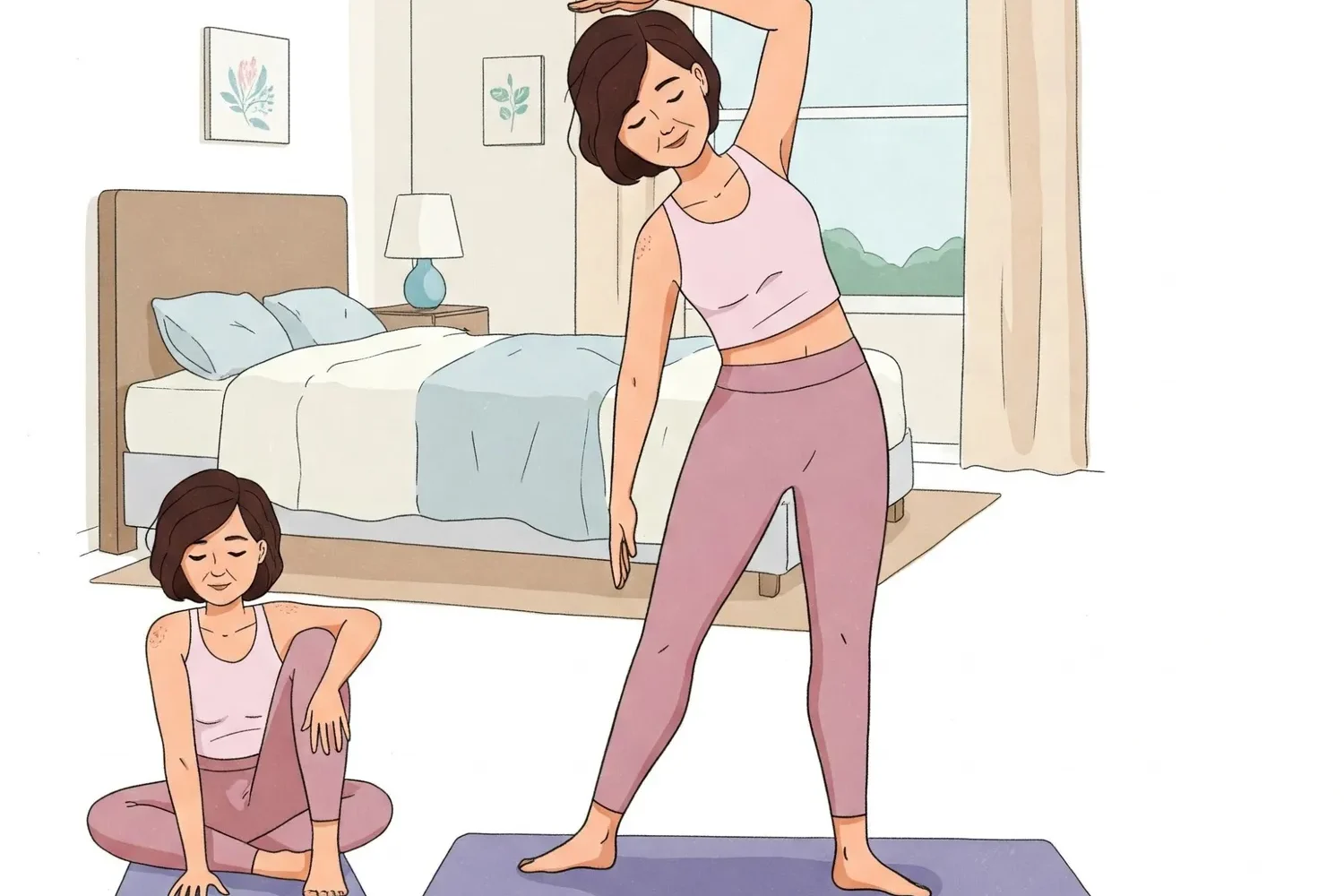
Managing joint pain and stiffness, especially during flare-ups, can be challenging, but incorporating gentle morning stretches into your routine can help improve flexibility, reduce discomfort, and ease stiffness. This guide provides simple, effective stretches to help you move comfortably without aggravating your condition.
Understanding Joint Pain and Flare-ups
Flare-ups often cause increased pain, swelling, and stiffness, making movement difficult. During these times, it’s important to engage in low-impact, gentle exercises. Gentle stretching can help reduce stiffness and improve joint mobility without placing additional strain on the body.
Safe Stretching Techniques for Flare-ups
1. Warm-up (5 minutes)
A gentle warm-up prepares your body for stretching and reduces the risk of injury.
- Deep Breathing: Sit comfortably and take slow, deep breaths. This helps calm your body and relax muscles.
- Light Joint Movements: Start with small, slow movements such as rotating your wrists, ankles, or shoulders to loosen up your joints.
- Massage: A light self-massage can help release any tension before stretching.
- Heat Therapy: Applying heat to stiff joints can help relax muscles and improve circulation, making stretching more effective.
2. Modified Stretches
When experiencing a flare-up, modify your stretches to ensure they are gentle and safe.
- Passive Stretches: Use cushions or props to support your body during stretches, allowing for a deeper stretch without exerting pressure.
- Range of Motion: Perform small, controlled movements to gently stretch the joints. Focus on areas that feel stiff but avoid overextending.
- Breathing Exercises: Pair stretching with deep breathing to help relax and reduce tension.
- Water Exercises: If accessible, performing stretches in water can reduce impact on the joints and provide resistance to strengthen muscles.
3. Proper Form
Maintaining good posture and form during each stretch is essential to prevent injury.
- Posture: Sit or stand tall with your back straight and engage your core. This helps support your joints and prevents strain.
- Controlled Movements: Stretch slowly and smoothly, avoiding jerky or quick movements.
- Alignment: Keep your joints aligned to avoid unnecessary pressure, such as ensuring your knees are in line with your toes during leg stretches.
- Breathing: Focus on deep, steady breathing throughout the routine to maximize the stretch and relax your muscles.
Adaptation Strategies
Flare-ups can vary in severity, so it’s important to adapt your stretching routine accordingly.
- Reduce Intensity: Start with gentler, shorter stretches to prevent over-exertion. As you feel more comfortable, you can increase the intensity.
- Increase Rest Periods: Allow more time for rest between stretches to avoid overstressing your body.
- Use Support: Use props like cushions or chairs to support your body during stretches, especially for more difficult or painful movements.
Monitoring Progress
Tracking your progress will help you stay on track and adjust your routine as necessary.
- Pain Levels: Keep a record of how much pain you feel before, during, and after each stretch. This helps you gauge which stretches work best for you.
- Mobility and Stiffness: Note any improvements in flexibility or reduction in stiffness.
- Energy Levels: Pay attention to your energy levels before and after stretching to ensure that the routine is beneficial.
Starting Your Stretch Routine
When beginning your morning stretches, take it slow and be patient with yourself. Consistency is key to improvement.
- Start Slow: Focus on a few simple stretches to start with. Gradually increase the duration and intensity as you become more comfortable.
- Focus on Form: Ensure your posture and form are correct to avoid injury.
- Track Progress: Use a journal to note any improvements in pain levels, mobility, and stiffness.
- Stay Consistent: Stretch daily, even for a few minutes, to help maintain flexibility and reduce stiffness.
Common Challenges and Solutions
- Morning Stiffness: If you feel stiff in the morning, start with gentle movements to loosen up before diving into more intense stretches.
- Time Constraints: If you are short on time, focus on key stretches for the areas most affected by stiffness, such as your back, hips, or shoulders.
- Motivation: It can be hard to stay motivated, but setting small goals and celebrating your progress can help keep you on track.
- Flare-ups: If your flare-up worsens, reduce the intensity or frequency of your stretching routine and consult a healthcare provider if necessary.
Frequently Asked Questions
- How do I know if I’m stretching safely?
Stretching should feel comfortable. If you feel pain, stop immediately. Never force a stretch, and always listen to your body. - What if I experience pain during a stretch?
Stop the stretch immediately and rest the affected area. Apply ice if necessary, and consult a healthcare provider if the pain persists. - How often should I stretch during a flare-up?
Stretch daily, but adjust the intensity and frequency based on how you feel. During severe flare-ups, you may need to reduce the intensity or frequency of your routine.
Conclusion
Incorporating gentle morning stretches into your daily routine can greatly improve joint mobility and reduce stiffness, especially during flare-ups. By starting slow, maintaining good form, and listening to your body, you can improve your flexibility and reduce discomfort over time. With patience and consistency, gentle stretching can help you move more comfortably throughout the day.